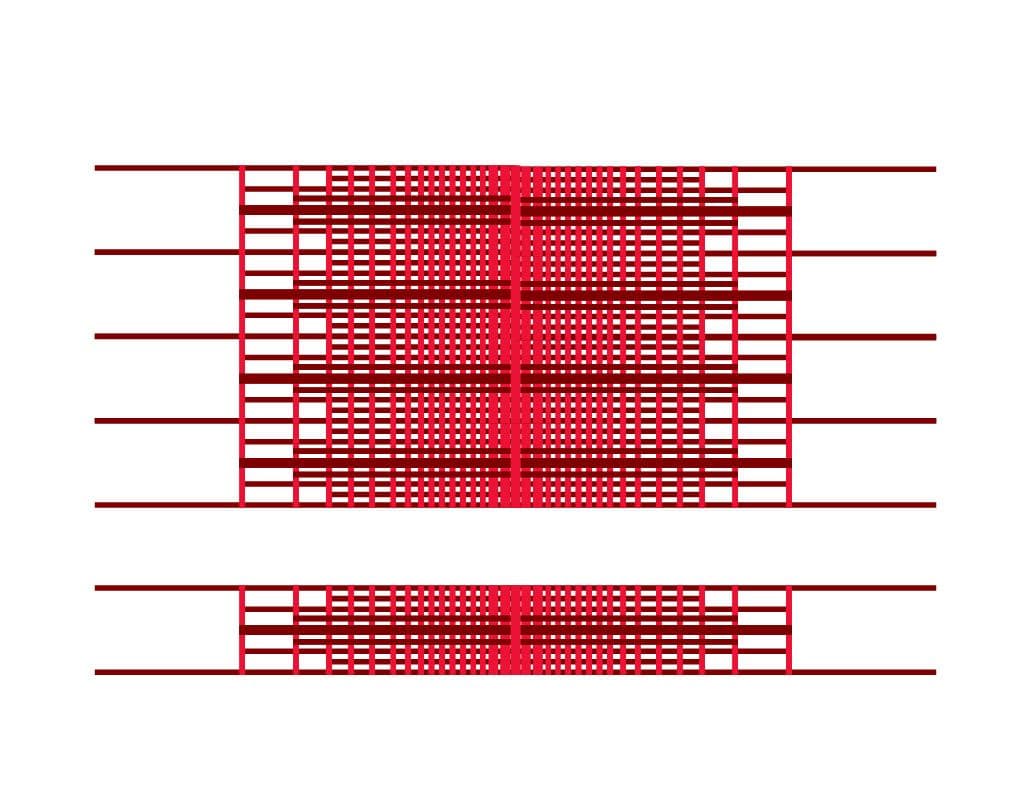

 PD.098. Ra-macas
A quintessential symbol of nomadic cultures, the flexibility of hammocks transcends a single use, it functions as a chair, a sofa, a bed, a crib and even as a casket Traditionally handwoven with local fibers, it represents adaptability, comfort, and cultural transcendence for several indigenous communities in the deep Amazonian forest.
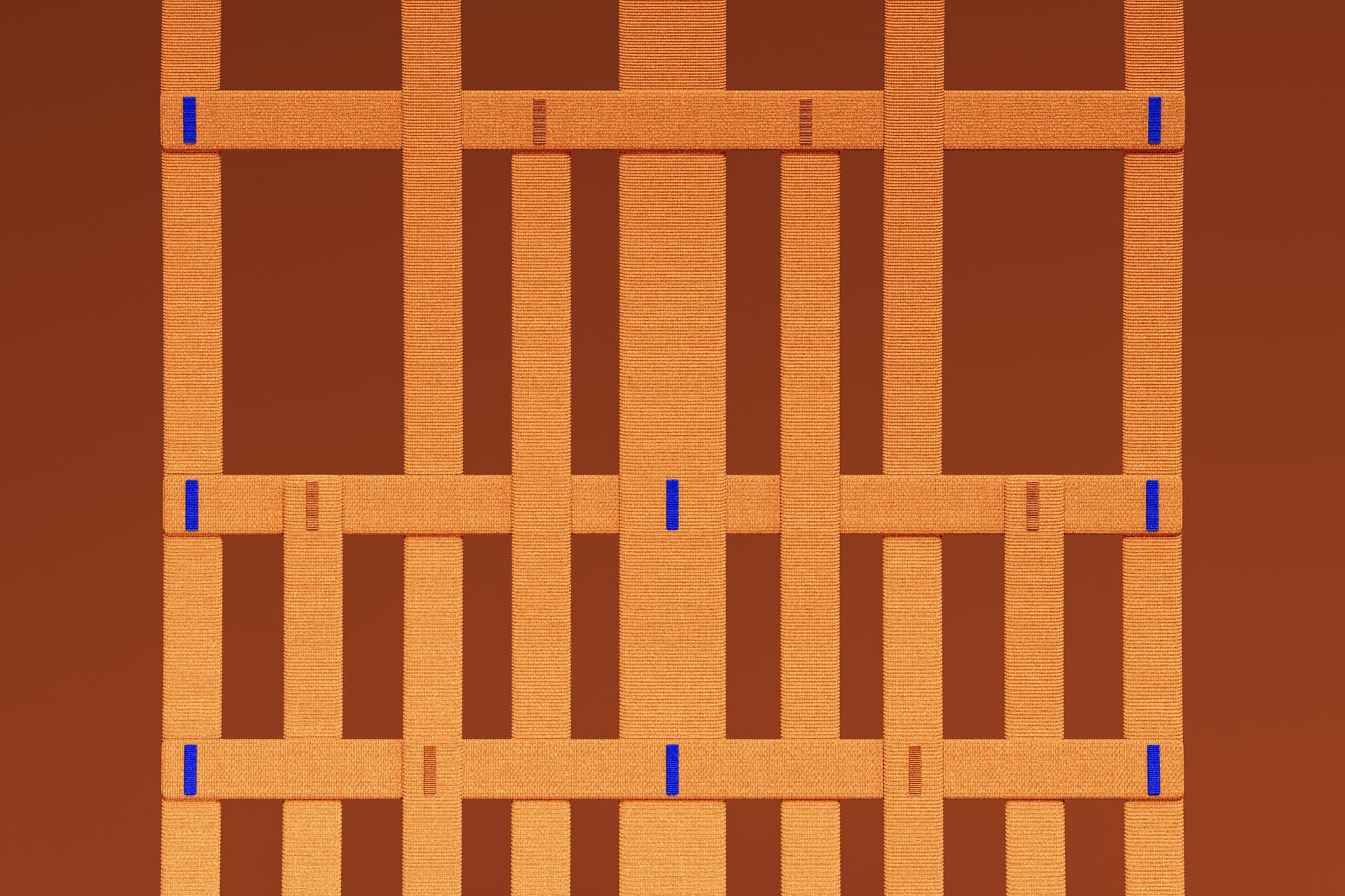
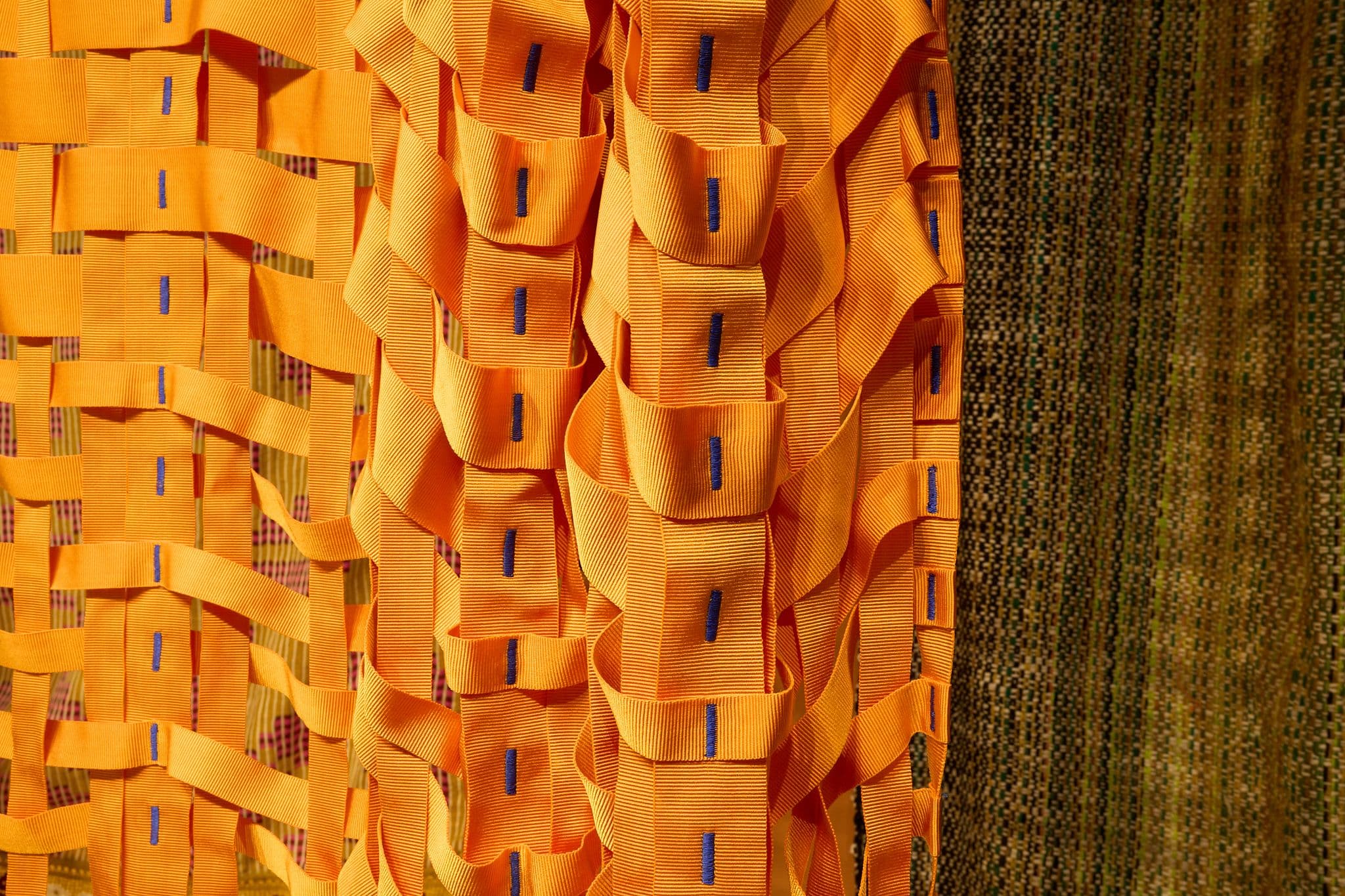
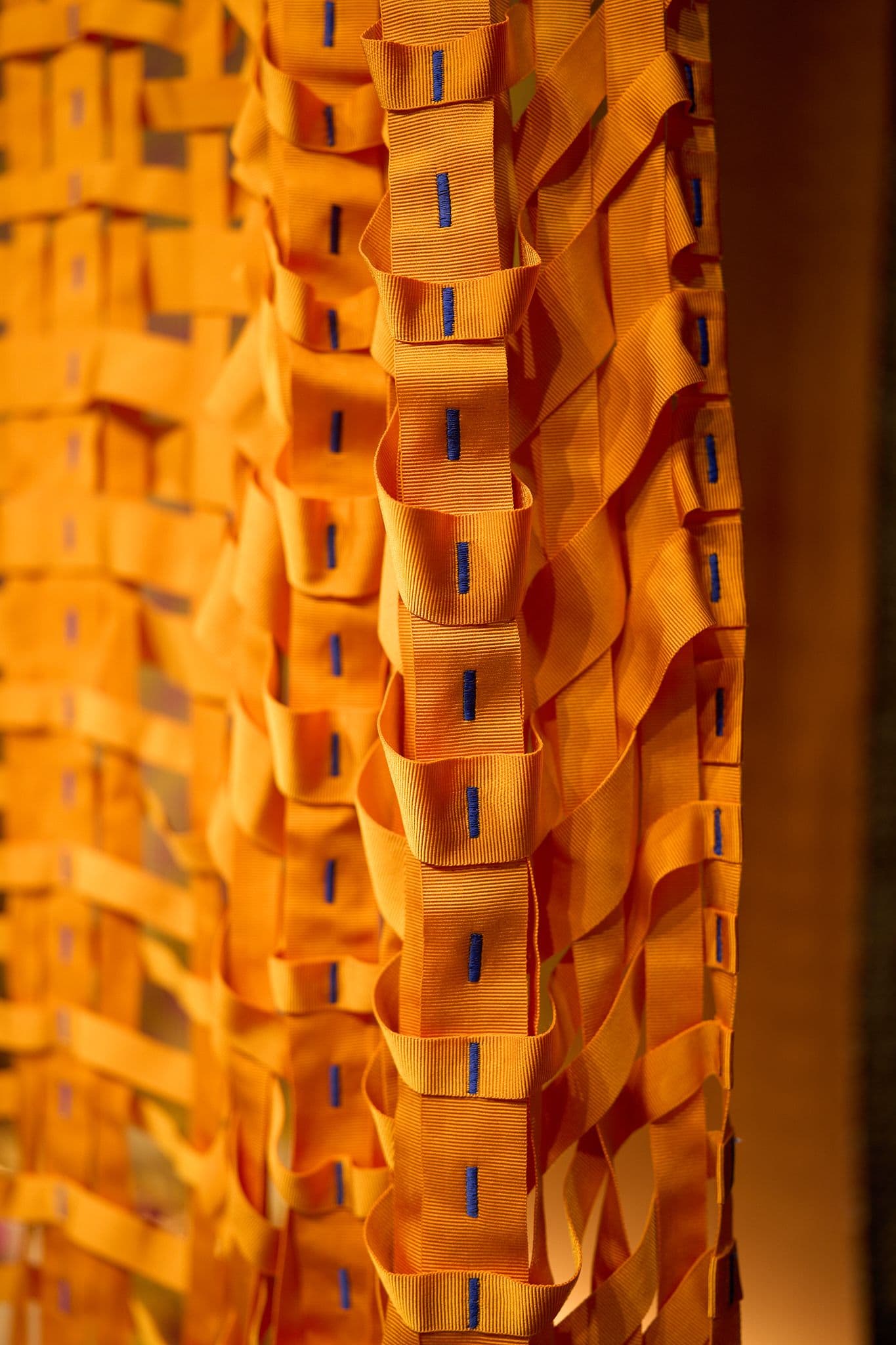
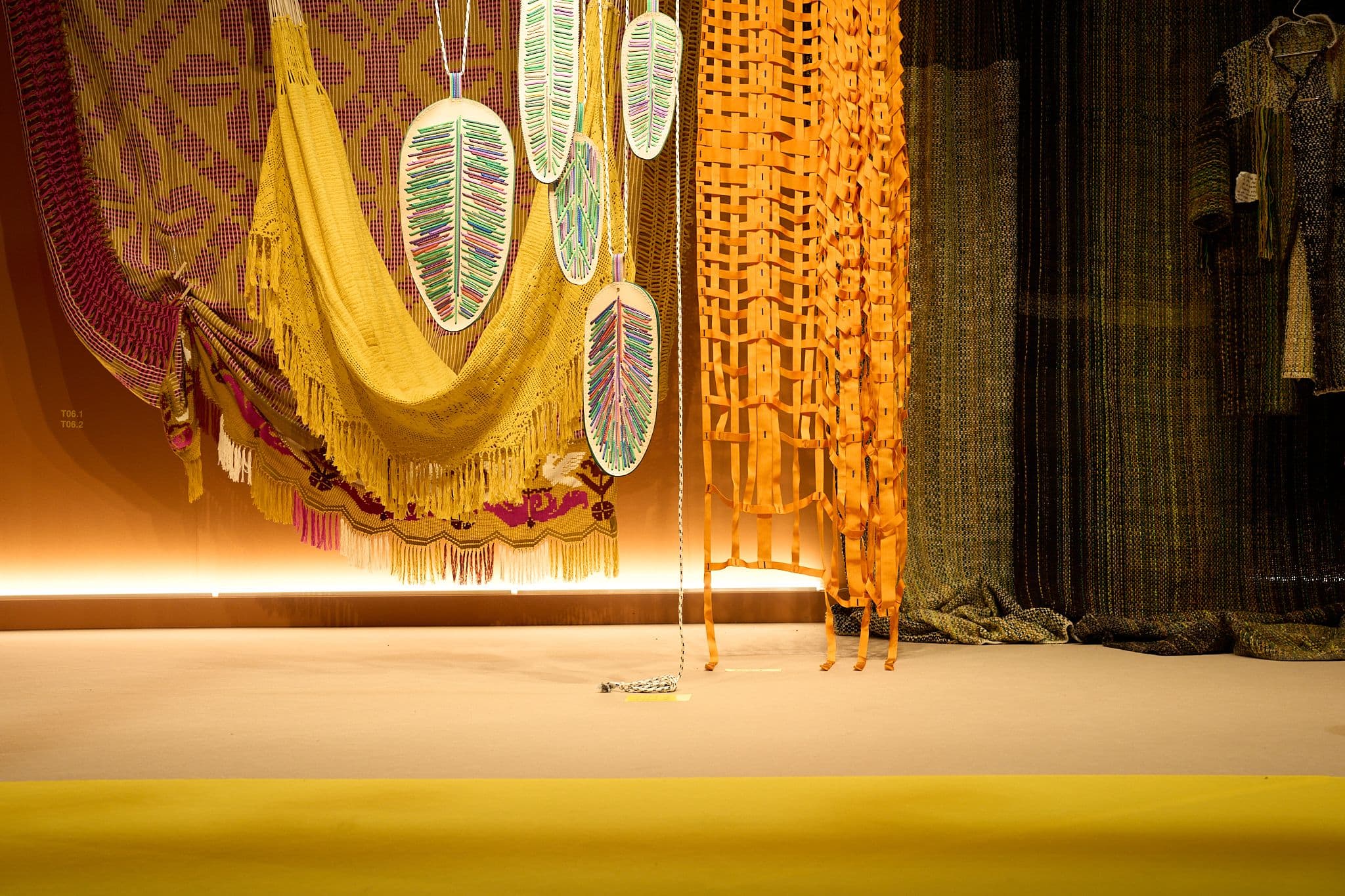
Ra-macas, RADS’s revision of the traditional object, are designed and fabricated with high performance nylon and cotton weaved and fixed by embroidery elements, create a pattern that recalls construction site protection nets. Modules of 45cm wide builds up a full expandable system, that targets the contemporary necessities of a hammock, a single module will be enough for a chair, a double module for a chaise and more than 3 will work comfortably as a bed.
The system, in current development by traditional weaving companies from Northen Italy, debuted as a prototype during SaloneSatellite 2025 edition, in Milan, as part of TRAMA—a curatorial project led by Rodolfo Agrella, showcasing the work of contemporary textile and
weave designers from Latin-America, including México, Venezuela, Colombia,
Perú and Bolivia. Juxtaposing ancestral techniques from indigenous groups,
new materials and the region’s color-sensitivity, framed in the duality of the objects and the story behind them.
Ra-macas is a contemporary revision of traditional hammocks—a multifunctional object rooted in nomadic and Indigenous Amazonian cultures, used as a chair, bed, cradle, or even casket.
Woven from high-performance nylon and cotton, with embroidered joints recalling construction safety nets, the modular system adapts to modern needs: one unit forms a chair, two create a chaise, and three or more become a bed.
Developed in collaboration with traditional Italian weaving ateliers, Ra-macas debuted as a prototype at SaloneSatellite 2025 in TRAMA, an exhibition curated by Rodolfo Agrella, showcasing the work of contemporary textile and weave designers from Latin-America, including México, Venezuela, Colombia, Perú and Bolivia. Juxtaposing ancestral techniques from indigenous groups, new materials and the region’s color-sensitivity, framed in the duality of the objects and the story behind them.
Paolinni
Nate Gardner
Diana Baldera
01. Photography

02. Video - Animations